Ideas · Strength and direction
YOU CANNOT BITE WATER
When strength needs a different direction
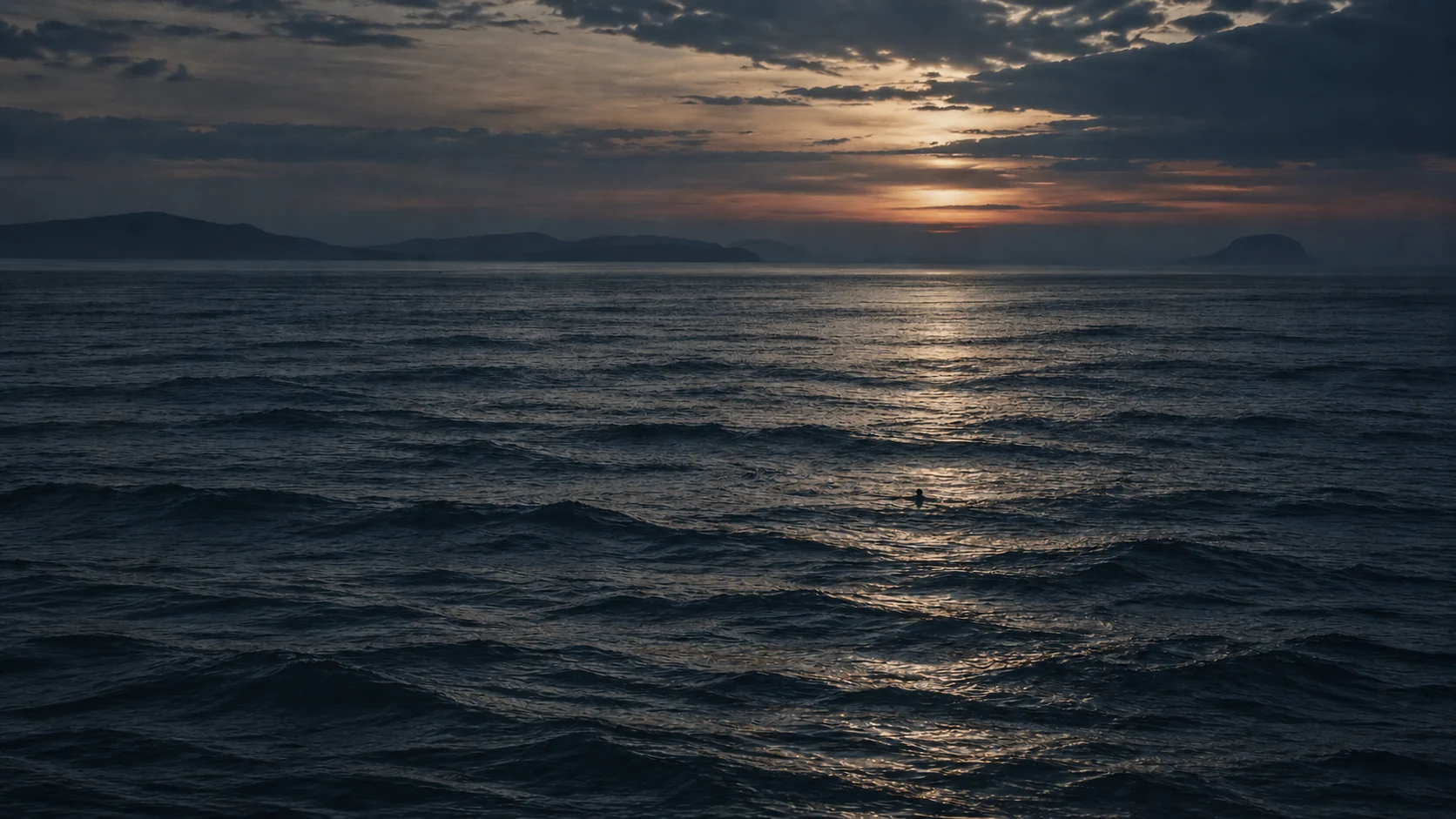
No matter how sharp your teeth are, you cannot bite water.
There is nothing wrong with the teeth. That’s what makes the thought worth considering.
We spend much of our lives sharpening one thing or another. We learn to work, to endure, to keep our word when keeping it becomes inconvenient. We learn to get back up. Try again. Stay a little longer. Find another way. Somewhere along the line most of us discover that wanting something isn’t worth much by itself. You have to go after it.
There is honor in another try. Send the application after the rejection. Have the conversation again after making a mess of it the first time. Go back to the work that beat you yesterday. Much of what gets accomplished in this world happens because somebody stayed with it longer than seemed reasonable.
The hard part is that nobody tells us which try will matter.
The tenth failure looks pretty much like the ninth. Only later do we learn whether the eleventh might have changed things. It is easy to tell someone he should have known when to quit after we know how the story ended.
He didn’t.
Persistence deserves the benefit of that doubt.
The trouble begins when we assume that because persistence has carried us through so much, everything in front of us will eventually yield to it.
Suppose you want to see the sunrise.
You’re up before daylight and running toward what you believe is the best place to watch it. Your legs begin to tire, but you keep going. Another mile. Then another.
There is nothing wrong with your legs or your heart.
You’re running west.
Running harder won’t help. Neither will believing more strongly in the sunrise. Another five miles will only put you five miles farther in the wrong direction.
The difficulty comes after you’ve already run twenty.
Those miles cost something. You got up for them. Worked for them. Maybe told other people where you were going. Turning around now feels uncomfortably close to admitting they were wasted.
So you run the twenty-first.
We all want the miles behind us to count.
Persistence can carry a man a very long way. It cannot make west become east.
Maybe we confuse persistence with repetition more often than we realize. They can look much the same from the outside. Both involve effort. Both may require stubbornness. Both can leave a man tired.
But they are not the same.
A different road can still lead to the same place. A person who changes treatment hasn’t surrendered to the illness. Someone who finally asks for help hasn’t necessarily given up anything except the notion that help wasn’t needed.
Persistence isn’t loyalty to a method. It is loyalty to what matters.
That becomes harder when the method has worked before.
We trust what has carried us. This is how I solve things. This is what I know.
Experience is useful that way. It saves us from having to relearn every lesson from the beginning. But experience has a quiet weakness. After enough success, we can begin to believe that what worked before ought to work again.
Usually it does.
Until it doesn’t.
Changing direction then asks something different of us. Not more effort — we already know how to give effort. It asks us to admit that yesterday’s answer may not fit today’s question.
That doesn’t make yesterday wrong.
A good tool remains a good tool even when the next job requires something else.
The trouble is that life seldom marks these moments clearly.
Sometimes another push is exactly what is needed. Sometimes the tenth knock opens the door. People recover after terrible diagnoses. Families find their way back to one another after years apart. Work that seemed to be going nowhere finally becomes something.
Some things that look impossible are only hard.
We shouldn’t turn acceptance into a respectable excuse for quitting because we’re tired. There are promises worth keeping when keeping them hurts. People worth standing beside when standing there has become difficult. Things worth trying once more when nobody would blame us for walking away.
Sometimes the answer is to bite harder.
But wanting something badly doesn’t tell us whether the way we’re pursuing it can ever give it to us.
That question is harder.
Is what I’m doing still capable of reaching the thing I’m trying to change?
Sometimes the answer is yes.
Then keep going.
Sometimes the answer is different.
Some things are water.
You cannot argue someone into loving you. You cannot steer the life of a grown child simply because you can see a road you believe would be easier for him. You cannot go back and unsay what was said. You cannot work hard enough today to change yesterday.
Here the sunrise doesn’t quite fit anymore.
The man running west can turn around. What he wants is still waiting in the east.
There are other times when the thing we want must change too.
You can close your fist around water as hard as you like. A stronger hand won’t help. A better grip won’t help. The water isn’t resisting you. It is simply water.
Eventually the question changes from how to hold it to what can be done with it.
That is where acceptance becomes a more interesting word.
Acceptance can sound like doing nothing. Sometimes it is exactly the opposite. It means seeing clearly enough to stop spending our strength on the part that cannot be changed and asking what remains.
Yesterday is fixed. What we do with yesterday isn’t. Another person’s choice may belong entirely to that person. What we do in response still belongs to us. A loss can be permanent without making everything around it meaningless.
There is still work to do.
It is simply different work.
A man trying to bite water isn’t weak. He is using the wrong strength.
Put him in the water and strength matters again.
Swimming is work. A swimmer pays attention to the current. He learns when to push against it and when pushing straight into it will exhaust him without carrying him anywhere. He adjusts his stroke. Changes his angle. Rests when he must. Then moves again.
He hasn’t surrendered to the water.
He has learned what water requires.
There are things in a life that work much the same way. They aren’t defeated so much as carried. A person may carry a loss for forty years and still build a good life around it. He may carry regret without allowing regret to make every decision that follows. He may live with an answer he never wanted and still decide what to do tomorrow morning.
That takes persistence too.
Maybe more than we usually give it credit for.
Strength is not endless. Neither is attention. Neither are the years.
That is the real cost of running west. It isn’t merely that we fail to reach the sunrise. Every mile spent going the wrong way is a mile we could have spent somewhere else.
A person can spend years arguing with yesterday while today waits on the porch. He can work so hard trying to recover what is gone that he fails to notice what remains.
Maybe there are only a couple of honest questions.
What am I actually trying to reach?
And am I protecting that, or only the way I chose to go after it?
Keep your teeth.
Life will give you plenty of reasons to use them. Push when the thing in front of you can still move. Stay when staying matters. Try again when another try still has a chance to matter.
Don’t give up something worthwhile merely because it became hard.
Persistence matters too much for that.
But it also matters too much to waste.
The man running west can turn around. The twenty miles behind him remain twenty miles. Nothing changes that. But they do not get to choose the direction of the twenty-first.
The sunrise is still in the east.
Water asks something else.
Water has never let itself be held.
It has held up every swimmer who ever lived.